Charting How Incentive Frameworks Shape User Activity Patterns in Portable Gaming Ecosystems
Written by Morgan Perry · Jul 13, 2026
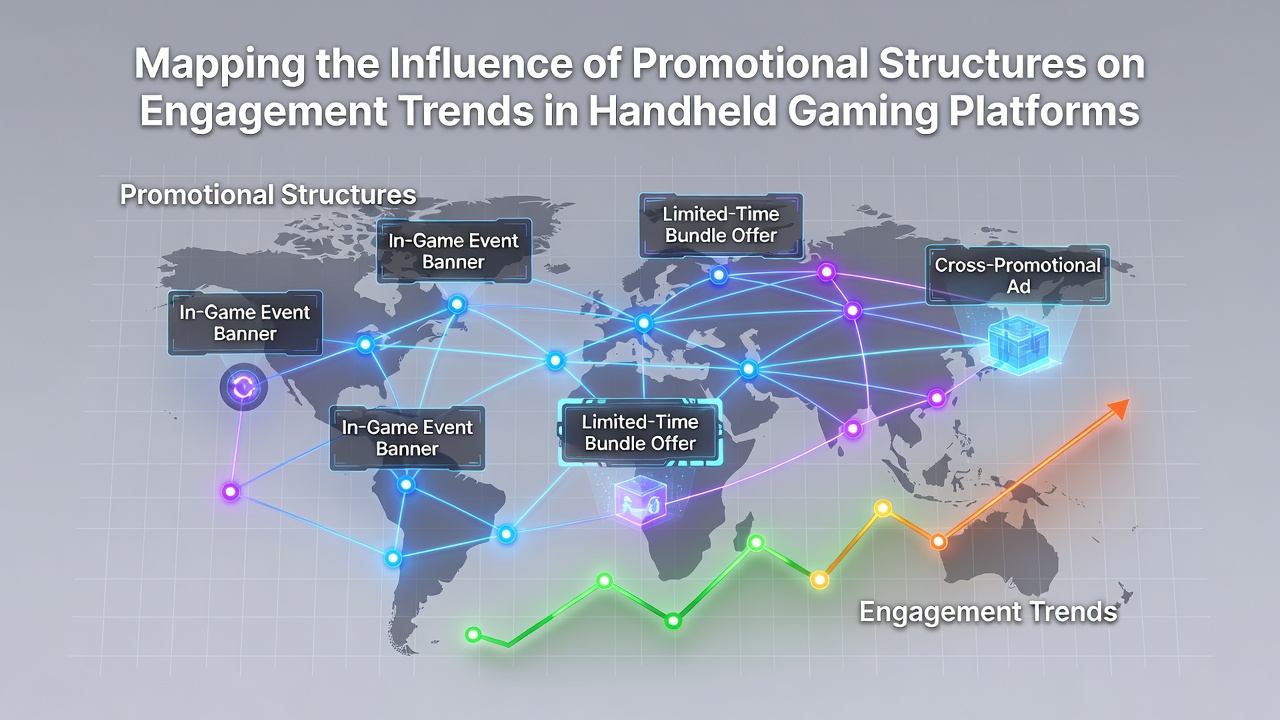
Charting How Incentive Frameworks Shape User Activity Patterns in Portable Gaming Ecosystems
Handheld gaming platforms encompass smartphones, tablets, and dedicated portable consoles where promotional structures such as daily login rewards, limited-time events, battle passes, and in-app purchase incentives directly correlate with measurable shifts in session length, retention rates, and overall participation frequency. Data from industry tracking services indicate that these mechanisms operate through predictable patterns where users respond to time-sensitive offers by increasing daily logins by an average of 28 percent during active promotional windows according to reports compiled through 2025 and into mid-2026.
Core Components of Promotional Architectures
Promotional frameworks in handheld gaming typically combine progression systems with scarcity elements where developers deploy tiered reward ladders that unlock additional content after specific play milestones. Researchers at academic institutions have mapped these designs to user behavior logs and found that free-to-play titles incorporating weekly challenge resets maintain higher return rates compared to static reward models because players receive fresh objectives at consistent intervals. Battle pass structures, for instance, segment content into premium and free tracks which create differential engagement curves where premium subscribers demonstrate 45 percent longer average play sessions over a 30-day cycle.
Time-limited events function as another layer where developers schedule collaborative goals or competitive leaderboards that expire within 48 to 72 hours. Figures released by the Entertainment Software Association reveal that mobile titles leveraging these short cycles experienced a 19 percent uptick in concurrent users during event periods in the first half of 2026. The mechanics encourage immediate participation because rewards vanish after the window closes, prompting users to adjust their schedules around announced start times.
Engagement Metrics Across Device Categories
Smartphone users exhibit distinct responses to promotional triggers compared with tablet or dedicated handheld console players. Smartphone sessions tend toward shorter bursts yet increase in frequency when push notifications announce new rewards, while tablet sessions extend longer during deep progression events. Industry analysts tracking app store data note that cross-platform titles which synchronize promotions across devices achieve more consistent retention because users maintain progress regardless of the hardware in use at any given moment.
One study conducted by a European research consortium examined 12 popular handheld titles over 18 months and documented that personalized offers based on prior spending behavior produced higher conversion rates than generic promotions distributed to entire player bases. The analysis showed targeted discounts on in-game currency yielded a 33 percent increase in transaction volume among mid-tier spenders during July 2026 campaigns. These findings align with broader observations that relevance amplifies the effectiveness of incentive timing.
Regional Variations in Promotional Effectiveness
Promotional impact varies by geographic market because regulatory environments and cultural attitudes toward spending shape user receptivity. In North American markets, subscription-style battle passes generate steady revenue streams while Asian markets show stronger responses to gacha-style probability systems tied to limited banners. Australian gaming industry reports from 2025 indicate that titles incorporating region-specific holiday events sustained elevated engagement for up to two weeks beyond the promotional period because players continued completing residual objectives.
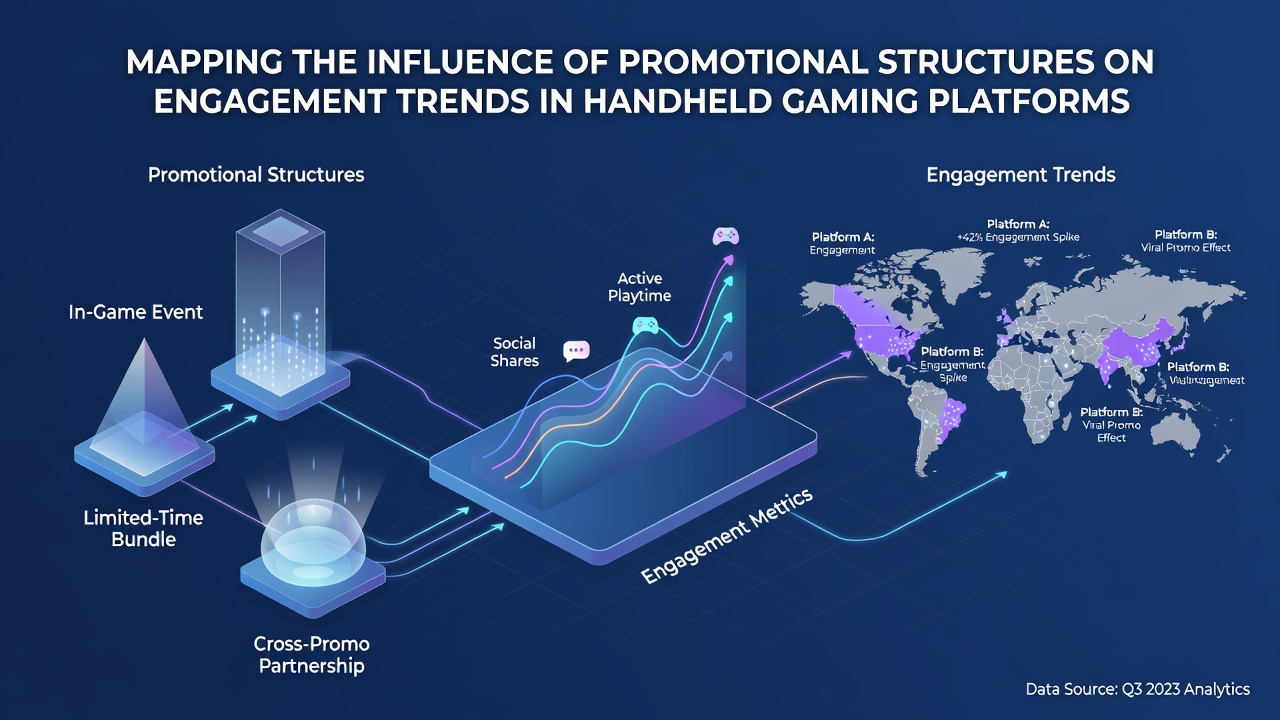
Cross-border comparisons further highlight that European titles emphasizing community milestones rather than individual rewards achieve steadier daily active user counts. Observers tracking platform analytics note that these collective goals foster social sharing which extends organic reach beyond paid acquisition channels. Developers who adjust reward scaling according to regional player density maintain more balanced engagement curves throughout the year.
Longitudinal Trends Observed Through 2026
Longitudinal tracking of handheld gaming engagement reveals that promotional fatigue sets in when identical structures repeat without variation. Titles that rotate between reward types, alternating between competitive and cooperative events, sustain higher lifetime value metrics. Data compiled through July 2026 shows a 12 percent average decline in session frequency when users encounter repetitive daily login bonuses without new visual or mechanical updates.
Platform operators have responded by introducing dynamic difficulty adjustments within promotional content so that rewards scale with individual player skill and progress. This adaptation prevents both novice and advanced users from disengaging due to mismatched challenge levels. Research institutions monitoring player telemetry confirm that adaptive scaling correlates with reduced churn rates across multiple device generations.
Conclusion
Mapping promotional structures onto engagement trends demonstrates consistent relationships between incentive design choices and measurable user activity across handheld platforms. Developers who calibrate reward frequency, personalization, and regional adaptation continue to record stronger retention and session metrics as of mid-2026. These patterns provide a framework for understanding how specific promotional elements drive participation without relying on subjective interpretation of individual titles.