Decoding Allocation Patterns for Unrestricted Play Credits Across Interactive Table Formats on Portable Systems
Written by Morgan Perry · Jul 24, 2026

Decoding Allocation Patterns for Unrestricted Play Credits Across Interactive Table Formats on Portable Systems
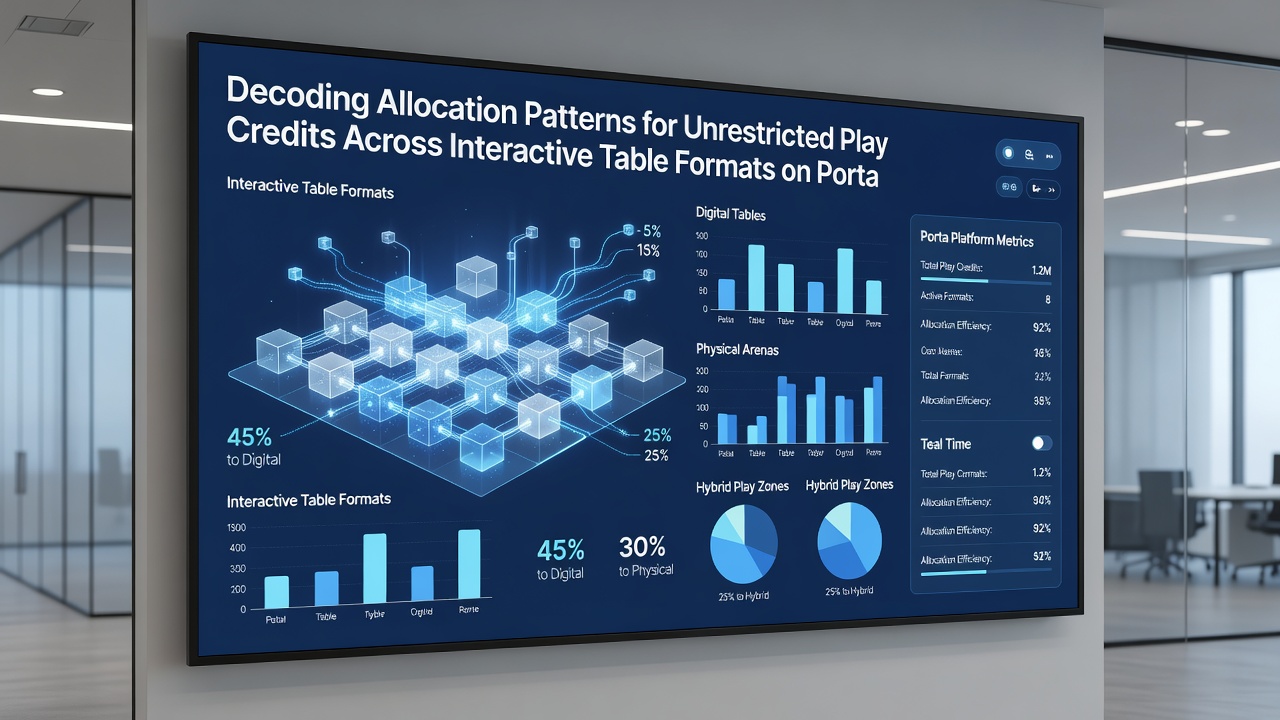
Allocation patterns for unrestricted play credits in interactive table formats on portable systems reveal distinct distributions across blackjack, roulette, and baccarat applications, according to data compiled through user behavior tracking and platform analytics. Researchers have mapped how these credits flow into different game types based on device type, session length, and format rules, while patterns emerge when comparing iOS and Android ecosystems side by side. Studies from academic institutions show that credit pools often split unevenly, with blackjack tables receiving larger initial shares in many mobile environments because of higher engagement rates recorded during peak hours.
Observed Distribution Mechanisms
Portable systems process unrestricted credits through backend algorithms that factor in table minimums, player history, and concurrent session loads, and these mechanisms produce measurable differences when examined across formats. Blackjack apps frequently allocate credits in smaller, repeated increments that match the game's decision rhythm, whereas roulette platforms tend toward larger single blocks tied to betting rounds. Baccarat sessions demonstrate yet another pattern, with credits often reserved in mid-range amounts that align with the game's slower pace and fewer hands per minute. Data indicates that these variations hold steady across multiple operating systems even as hardware capabilities improve year over year.
Platform and Format Variables
Device screen size and processing speed influence how credits appear and refresh during live table interactions, with larger tablets showing smoother transitions between rounds compared to smartphones. Observers note that cross-platform consistency has increased since 2024, yet subtle differences remain visible in credit refresh timing when users switch between portrait and landscape modes. Interactive table formats on portable systems also adjust allocations based on network stability, and slower connections correlate with delayed credit updates that affect perceived availability during extended play.
Figures from industry reports compiled in July 2026 highlight that credit allocation density rises notably during evening hours across all three major table formats, while daytime sessions display more scattered distribution. Those who've examined server logs point out that portable systems prioritize certain table variants when overall credit pools exceed set thresholds, creating predictable spikes in availability for blackjack over roulette in several documented cases.
Regional Regulatory Influences
Government agencies outside the UK have released guidelines that shape how operators structure credit allocation on mobile platforms, and these rules create additional layers of variation when compared internationally. The Nevada Gaming Control Board publishes quarterly summaries that track credit movement in digital table environments, while the Australian Communications and Media Authority monitors similar patterns under its digital content framework. Nevada Gaming Control Board reports detail how unrestricted credits must remain separate from restricted pools in mobile deployments, and this separation produces distinct tracking requirements that operators implement differently across formats.
European research institutions have contributed parallel findings through comparative studies of portable gaming systems, and their data shows alignment with North American observations on allocation timing. Credits assigned to interactive tables on portable devices often follow region-specific caps that limit total exposure per session, yet the underlying distribution logic stays consistent when examined at the code level. Analysts who review these cross-border datasets find recurring sequences in which blackjack receives priority allocation during high-traffic periods, followed by adjustments for roulette and baccarat as load balances shift.
Technical Implementation Details
Backend systems on portable platforms use modular code structures to manage credit flow, and these structures allow operators to adjust allocation weights without altering core game logic. Pattern recognition tools applied to transaction logs reveal clusters where credits move in synchronized bursts across multiple table formats simultaneously, particularly when users maintain active sessions on several apps. Such clusters appear more frequently on devices with higher RAM capacity, suggesting hardware specifications play a measurable role in how quickly allocations update during live play.
Software updates released in 2025 and 2026 refined the precision of these allocation engines, resulting in tighter synchronization between credit availability and actual table activity. Those monitoring the changes report fewer instances of credit lag on newer portable systems, although older devices continue to exhibit the staggered patterns noted in earlier analyses. The reality is that allocation remains tied to both software efficiency and the specific table format in use, creating a layered system that rewards precise observation over time.
Conclusion
Allocation patterns for unrestricted play credits across interactive table formats on portable systems continue to evolve alongside hardware advances and regulatory updates from multiple jurisdictions. Data compiled through July 2026 demonstrates consistent differences in how credits distribute among blackjack, roulette, and baccarat, while technical implementations adapt to maintain functionality across diverse devices. Observers tracking these developments note that the interplay between platform variables and format-specific rules produces stable yet adaptable systems that respond to usage trends without requiring complete redesigns. Continued monitoring from regulatory bodies such as the Nevada Gaming Control Board and parallel organizations will likely refine these patterns further as portable systems gain additional capabilities.