Layered Incentives Reshaping Retention Patterns in App-Driven Gaming Networks
Written by Morgan Perry · Jul 29, 2026
Layered Incentives Reshaping Retention Patterns in App-Driven Gaming Networks
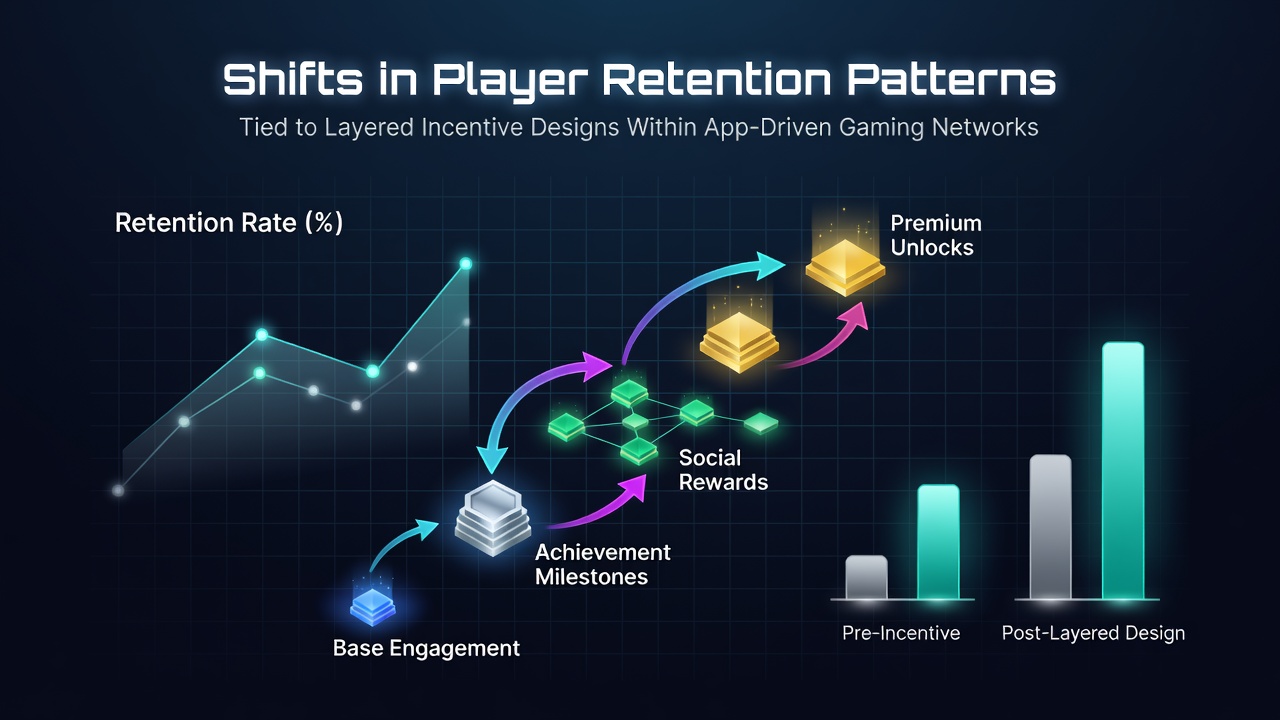
App-driven gaming networks have undergone measurable changes in how players stay engaged over time, and layered incentive designs play a central role in those dynamics. These systems combine daily login rewards, milestone bonuses, social sharing perks, and personalized challenges that adapt based on individual behavior patterns. Data collected across major platforms shows retention curves shifting as developers refine the timing and depth of these layered offers.
Studies tracking user cohorts from 2023 through July 2026 indicate that single-layer reward models lose effectiveness after the first thirty days, whereas multi-tier structures maintain higher active-user percentages at the sixty-day and ninety-day marks. Researchers at several analytics firms note that the addition of secondary and tertiary incentive layers creates compounding effects, where players return not just for one reward type but for overlapping progress systems that feel interconnected.
Core Components of Layered Incentive Systems
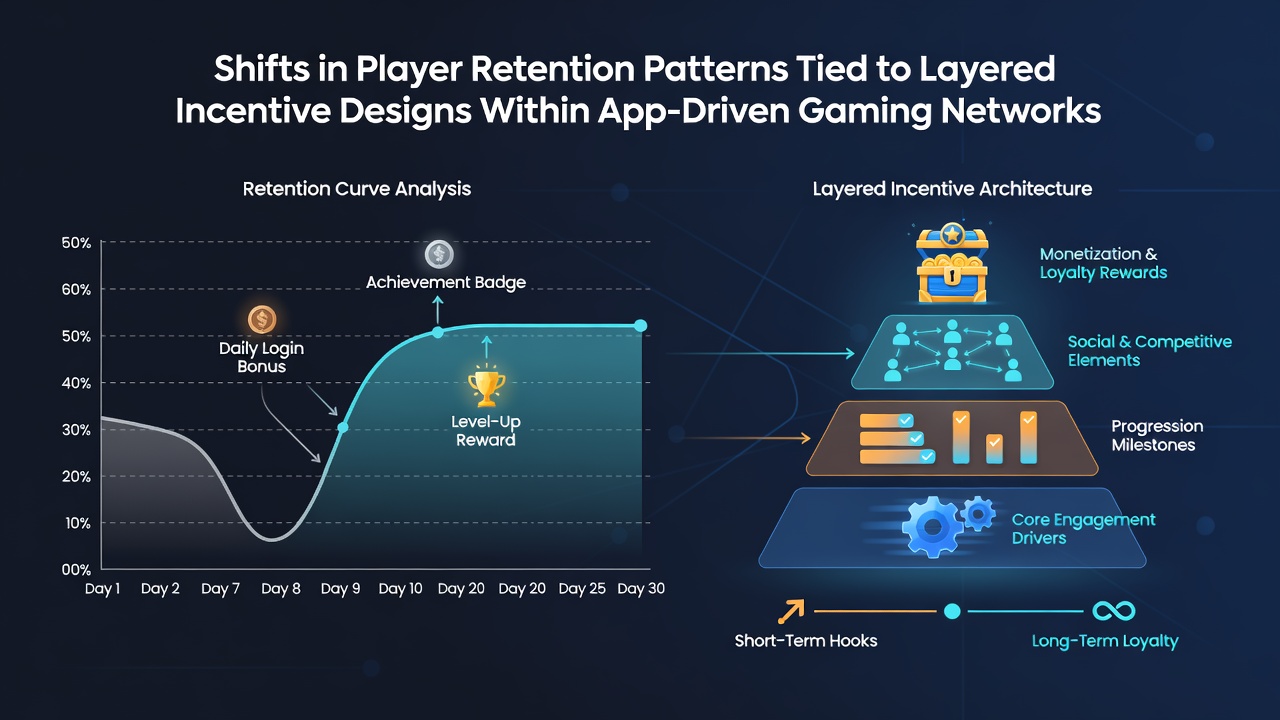
Modern gaming apps typically deploy incentives across four or five distinct layers that activate at different intervals. The base layer handles immediate gratification through small daily rewards, while the second layer introduces weekly or event-based challenges that require consistent play. Deeper layers tie into long-term progression such as battle-pass style tracks or community goals that unlock only after sustained participation across multiple weeks.
Platform data reveals that players who interact with at least three layers within the first two weeks show retention rates up to forty percent higher than those who engage with only the base layer. Developers adjust these layers continuously, using behavioral signals to surface the right incentive at the right moment rather than presenting every option simultaneously.
Observed Retention Pattern Changes
Retention graphs from multiple networks demonstrate a flattening of the traditional steep drop-off curve between days seven and thirty when layered incentives are present. Instead of losing the majority of new users quickly, some titles now maintain thirty-five to forty-five percent of day-one players through day thirty. The improvement appears most pronounced in games that synchronize incentive layers with social features, allowing friends to contribute to shared milestones.
Analysts tracking North American and European markets report similar patterns, though the magnitude varies by genre. Puzzle and simulation titles show steadier gains from layered systems compared with competitive action games, where real-time matchmaking can override incentive effects. By July 2026, several large networks had published internal benchmarks confirming these shifts across millions of monthly active accounts.
Regional Data and Industry Benchmarks
Reports from the Entertainment Software Association highlight that incentive layering correlates with extended session lengths in mobile titles released after 2024. Separate findings from European industry groups indicate comparable outcomes in markets where regulatory frameworks allow flexible reward structures. These sources document that players respond differently when incentives feel earned through varied activities rather than delivered through a single repetitive loop.
One analysis of Asian and Australian networks found that personalization of layer depth, based on early play data, further improves ninety-day retention by an additional twelve to eighteen percent. The study noted that players receiving dynamically adjusted incentives remained active longer than those assigned static reward paths.
Technical Implementation and Measurement
App networks rely on real-time telemetry to decide when to escalate a player from one incentive layer to the next. Machine-learning models process login frequency, in-app purchase history, and social interaction metrics to determine optimal reward timing. Developers test these models through controlled rollouts, comparing retention between segments exposed to different layer combinations.
Measurement frameworks now track not only raw retention percentages but also the specific layers that drove each return visit. This granular approach helps studios identify which combinations produce the most durable engagement patterns across diverse player demographics.
Conclusion
Layered incentive designs continue to influence retention trajectories within app-driven gaming networks as developers refine timing, personalization, and integration with social features. Data through July 2026 shows measurable improvements in day-thirty and day-ninety retention when multiple reward layers operate in coordination. Ongoing measurement and regional comparisons provide the evidence base for further adjustments to these systems across global markets.